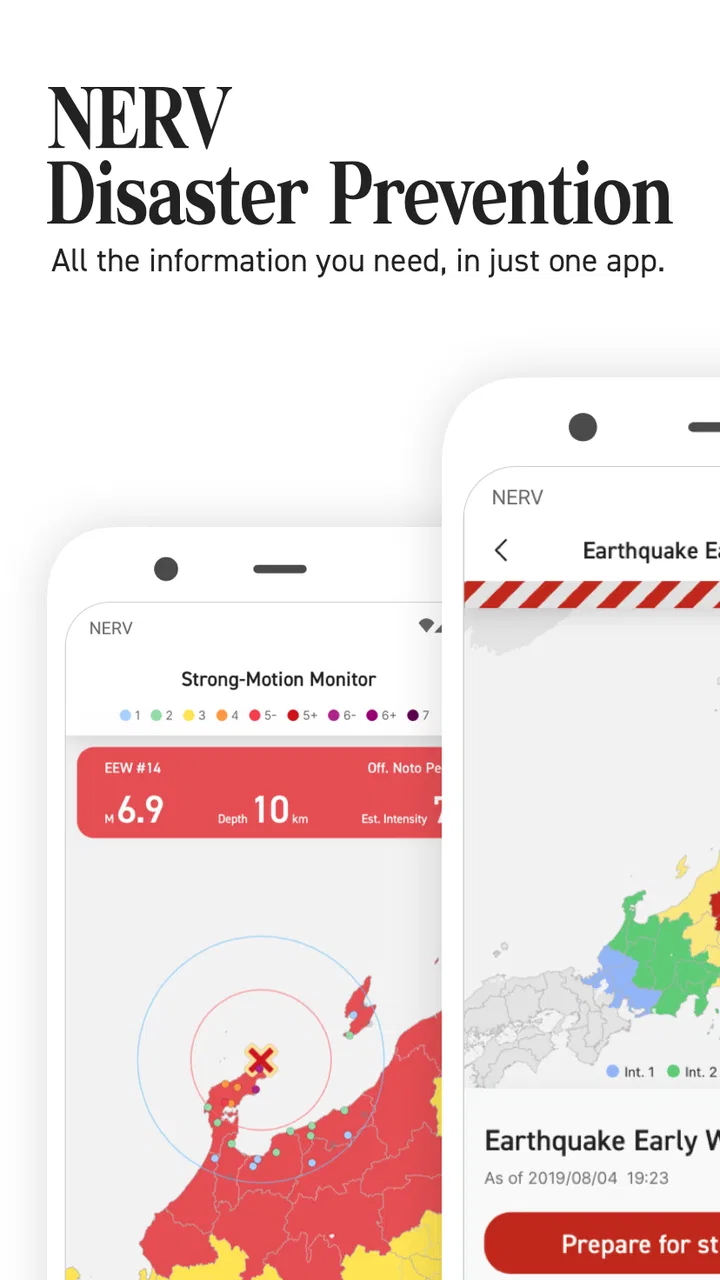
NERV Disaster Prevention
- 4.3
- Rating
- 1.00M
- Installs
- Free
- Price

 Analysis by App-foxy
I approached NERV Disaster Prevention as a weather and disaster-preparedness app rather than another forecast tool I would open once and forget. That distinction matters. Its first impression is tied to the fictional NERV presentation, but the useful question is whether that atmosphere turns into a dependable everyday habit. After spending time with it, I think the answer depends heavily on what you want from a weather app: a focused emergency companion can find a place on your phone, while someone seeking a broad, polished daily forecast may prefer a more conventional alternative.
The app is free to install, is suitable for Everyone, and comes from Gehirn Inc. It has reached more than a million installs and holds an average rating of 4.2 from roughly 5.4 thousand ratings. Those figures suggest that the concept has found a real audience, but they do not remove the need to judge its practical value. A distinctive theme can earn an initial download; only useful information and a manageable routine can keep an app around.
From striking first impression to a useful routine
I use the first section to look past the striking NERV presentation and focus on the practical question: can this app become a calm, repeatable part of checking the weather? I’ll consider how to fit it around everyday decisions without treating a consumer app as an emergency authority. That distinction leads into what makes the experience useful beyond its initial novelty.
You May Also Like

 Blood Strike: 2.5 Anniversary
Blood Strike’s Loadouts Turn Every Drop Into a Tactical Gamble
A close look at Blood Strike’s custom loadouts: how fast access to signature weapons reshapes its battle royale rhythm, rewards preparation, and narrows the gap between fights.

 Pandora - Music & Podcasts
Pandora’s Music Is Easy to Start, but Harder to Recover
Pandora’s strength is its low-effort path from a seed to a station. Its weak spot is how much confidence it asks you to place in connection, setup, and quiet recovery.

 8 Ball Pool
 Is Built on Rivalries, Rematches, and Routine
A close look at the rivalries, rematches, shared routines, and unanswered safety questions that turn a quick pool match into a persistent mobile community.

 Samsung Music
’s Quiet Strength Is Playing What You Already Own
Its reach comes less from spectacle than from dependable access to a personal library. That simplicity is both the app’s strongest retention engine and its ceiling.

 AccuWeather: Weather Radar
AccuWeather Review: A Quick, Clear Forecast for Everyday Decisions
For everyday plans, the best forecast is the one you can understand quickly. AccuWeather makes rain timing, radar, and local conditions easy to act on, with a few trade-offs.

 Hill Climb Racing
Why Hill Climb Racing Still Turns Crashes Into One More Run
A tiny car, a bumpy hill and one more upgrade: Hill Climb Racing keeps resurfacing because its simple chaos makes every near-miss feel personal.
More From Our News Desk



Why the first week feels different
The first week with NERV Disaster Prevention is more engaging than the usual experience of installing a weather application. The NERV identity gives the interface a recognizable purpose, and the disaster-prevention angle makes me think about conditions beyond whether I need an umbrella. That framing is valuable because it encourages a more deliberate look at the day ahead, especially when weather may affect travel, outdoor plans, or safety.
I would not describe the app as a replacement for every source of emergency information. Instead, I see it as a convenient layer between ordinary weather checking and more serious preparedness. It can become the place I look when I want a quick environmental check before leaving home, then a prompt to consult official channels when conditions appear more concerning. That division of responsibility is important: a themed app can make information easier to notice, but it should not be treated as the only authority during a serious event.
During an initial setup, I would recommend resisting the temptation to judge the app solely by its visual identity. The novelty is part of the appeal, but it is not the reason to keep it. I paid more attention to whether the information was easy to find, whether the screen encouraged a quick decision, and whether the app fit naturally into routines I already had. A weather app earns trust when it reduces hesitation rather than adding another screen to interpret.
A realistic use case is a morning commute on a day when the forecast looks uncertain. I can check conditions before dressing, look again before leaving work, and use the disaster-prevention framing as a reminder to think about the return trip rather than only the next hour. That is a small workflow, but it is more useful than opening an app simply because its design is familiar. The same habit works before a school run, a walk, or a weekend drive when changing conditions could affect the plan.
What it does better than a standard forecast app
The strongest difference is its focus. Many ordinary weather apps try to cover everything at once: long-range forecasts, maps, lifestyle scores, advertising panels, and a large collection of secondary details. NERV Disaster Prevention feels more purposeful because its identity points toward awareness and readiness. For users who find conventional weather screens cluttered or forgettable, that focus can make checking the forecast feel more intentional.
It also has an advantage over relying only on a phone’s built-in weather panel. The default option is convenient, but it is often something I glance at without thinking about how conditions affect the rest of the day. A dedicated disaster-prevention app can encourage a better question: “What should I prepare for?” rather than only “What is the temperature?” That change in mindset is one of the app’s most worthwhile qualities.
There is a trade-off, though. A general-purpose weather service may be better for users who want extensive comparisons, highly detailed forecasting tools, or a familiar interface that requires no adjustment. NERV’s appeal is narrower. Its presentation may feel less suitable if all you need is a quick temperature reading, and the theme may not appeal to people who prefer a neutral, minimal weather utility.
Small habits that make the app more useful
I found that the most sensible way to use it is in short, repeated checks rather than long browsing sessions. One check in the morning helps with clothing and travel. A second before heading home catches changes that matter later. A third is useful before an outdoor activity. This routine avoids turning the app into a source of constant alerts or anxiety while still giving it a practical role.
Another useful habit is to pair the app with a simple personal checklist. If the forecast suggests difficult conditions, I can confirm that my phone is charged, reconsider unnecessary travel, and make sure basic supplies are easy to reach. The application does not need to perform every preparedness task itself to be valuable. Its role can be to make me pause at the right moment.
I would also keep official emergency information available separately. That is not a criticism unique to this product; it is good practice for any consumer weather application. When an event becomes serious, the relevant local authority should take priority. NERV Disaster Prevention works best as an accessible awareness tool, not as a substitute for emergency instructions.
Whether it remains worthwhile after the novelty fades
I’ll weigh the app’s lasting appeal against the habits and expectations that shape its value over time. A focused preparedness perspective can be a welcome prompt, but it has to earn a place alongside a person’s existing weather routine. I’ll also consider when a simpler or broader alternative may be the more sensible choice.
Month-to-month value comes from repetition
After the first month, the NERV presentation naturally becomes less surprising. That is when the app has to prove its value through routine. In my view, it can remain useful if I connect it to moments that already happen every day. Weather checking before commuting, planning outdoor time, and reviewing conditions before returning home are repeatable behaviors. Without those anchors, the app risks becoming an occasional curiosity.
The disaster-prevention angle gives it a better chance of surviving beyond the initial novelty than a purely decorative themed app. It has a reason to be opened when the weather is unsettled, when a seasonal change affects plans, or when I want to think ahead about safety. That recurring purpose is more durable than the NERV styling alone.
Still, the long-term value will vary by location and lifestyle. Someone who spends most days indoors and already has a trusted weather routine may not gain much from adding another application. A frequent traveler may also prefer a service built around multiple locations and broader forecasting tools. NERV is more compelling for someone who wants one focused place to encourage regular awareness at home.
I would judge its month-to-month usefulness by asking three practical questions: Do I open it before decisions that depend on weather? Does it help me notice risk earlier than I otherwise would? Does it make preparation feel simple rather than dramatic? If the answer is yes, the app has earned its space. If I only open it to revisit the theme, the value is probably temporary.
Maintenance is light, but attention still has a cost
The app itself is free, which makes experimenting with it easy. The listed in-app purchases range from $1.99 to $3.49 per item, so users should pay attention to optional purchases rather than assuming every part of the experience is included without cost. I would first use the free experience long enough to understand whether it fits my routine. Paying for something only makes sense if it improves a function I will actually use repeatedly, not simply because the presentation is appealing.
The current version is 6.3.0, and the minimum operating system is Android 7.0. That makes the app accessible to many older Android devices, although anyone using an older phone should still consider overall performance and available storage before making it part of a daily routine. Keeping an app updated is part of maintaining trust, particularly for a weather or preparedness tool, so I would not ignore update prompts indefinitely.
There is also a human maintenance burden. A preparedness app cannot make me prepared if I never check it. I need to decide when it belongs in my day, what I will do when conditions worsen, and which official sources I will consult for serious warnings. That is not a flaw in the software, but it is an important expectation to set. The app can support a habit; it cannot create one automatically.
For a household, I would use it as a conversation starter rather than assume everyone will interpret the information in the same way. A parent might check it before a child’s outdoor activity, while another family member reviews the return journey. The useful outcome is not that everyone stares at the same screen; it is that weather-related decisions happen earlier and with less confusion.
Where fatigue can set in
The biggest risk is thematic fatigue. A strong NERV identity makes the app memorable, but a style that feels exciting during installation may become visually tiring when I only want a fast, quiet answer. This is especially true for users who prefer plain interfaces or who check weather several times a day. The more often I use a utility, the more I value speed and clarity over personality.
There is a second kind of fatigue: preparedness fatigue. If every uncertain forecast makes the experience feel overly dramatic, I may stop opening the app. A good routine should encourage sensible preparation without turning ordinary weather into a crisis. I would use it selectively and keep my response proportional to the actual conditions.
Another limitation is that the app may not satisfy people who expect one application to cover every weather need. If I want extensive planning tools, detailed comparisons between providers, or a highly customizable forecast dashboard, a mainstream weather service may be the better choice. NERV’s focused identity is a strength only when its focus matches the user’s priorities.
Notifications and repeated checking can also become distracting in any weather application. I would be careful about allowing the app to dominate my attention, especially if I already receive alerts from other services. The best setup is the one that gives me useful prompts without creating duplicate warnings or encouraging needless refreshing.
Who should install it, and who should skip it?
I would recommend NERV Disaster Prevention to fans of the NERV presentation who also want a weather app with a clear preparedness theme. It is a good fit for people who appreciate a visual cue that turns weather checking into a small safety routine. It may also suit families, commuters, and outdoor planners who want a reminder to think beyond the immediate forecast.
I would be more cautious about recommending it to someone who wants the most neutral and efficient weather screen possible. If the only requirement is a temperature glance, the phone’s built-in option may be enough. Users who depend on advanced forecasting analysis, many saved locations, or a broad set of specialized weather tools should compare it with established alternatives before switching.
It is also not the right app to trust in isolation during a serious disaster. I would keep local official channels and emergency guidance as the final reference. NERV can help me notice that I should pay attention, but the responsibility for urgent decisions belongs with reliable authorities and my own sound judgment.
My long-term verdict
What remains after the novelty fades is a focused weather experience with a useful preparedness mindset. I like that it can turn an ordinary forecast check into a prompt to consider the whole day, not just the next few minutes. The free entry point makes it easy to test, and the Everyone age rating means it is approachable for a broad audience. Its 4.2 average from around 5.4 thousand ratings reflects a generally positive reception, though I would still treat personal fit as more important than the number.
For me, the app earns lasting space only when I attach it to a repeatable habit: check before leaving, check before returning, and take sensible action when conditions deserve attention. That is a stronger reason to keep it than the theme alone. The app is at its best when it quietly supports preparation; it is less convincing when I expect it to replace a full weather ecosystem or official emergency information.
My recommendation is therefore selective but positive. Try NERV Disaster Prevention if you want weather information presented through a disaster-awareness lens and you enjoy an app with a distinctive identity. Give it a week of real use rather than judging it during the first excited launch. If it helps you make better daily decisions without adding stress, it has earned a permanent place. If you keep returning only for the novelty, a simpler weather alternative will probably serve you better.
FAQs for NERV Disaster Prevention
01What is NERV Disaster Prevention and how does it work?
NERV Disaster Prevention is a comprehensive app designed to provide users with real-time alerts and information on natural disasters. It integrates with local emergency services and uses GPS to deliver region-specific warnings. The app also offers safety tips and preparation guides to help users stay informed and ready in case of emergencies.
02Is NERV Disaster Prevention available for both Android and iOS devices?
Yes, NERV Disaster Prevention is available for download on both Android and iOS platforms. Users can easily find it on the Google Play Store and the Apple App Store. The app is designed to work seamlessly across different devices, ensuring everyone can access its vital features.
03Does NERV Disaster Prevention require an internet connection to function?
While the app does require an internet connection to receive real-time updates and alerts, it also stores critical information offline. This means users can access safety tips and preparation guides without internet access, which is crucial during network outages caused by disasters.
04Are there any subscription fees associated with using NERV Disaster Prevention?
NERV Disaster Prevention is free to download and use. However, there may be premium features or additional content available through in-app purchases. These might include advanced alert systems, ad-free experiences, or expanded data access for specific regions. Users can choose based on their needs.
05How accurate and reliable are the alerts provided by NERV Disaster Prevention?
The app sources its data from reliable government and local emergency resources, ensuring a high degree of accuracy and timeliness. However, as with any alert system, there may be occasional delays or inaccuracies due to unforeseen circumstances. It is advisable to have multiple sources of information during emergencies.
Pros
- User-friendly interface for quick navigation.
- Real-time alerts for timely updates.
- Customizable settings to suit personal needs.
- Offline mode ensures access without internet.
- Detailed guides for emergency situations.
Cons
- Limited language options available.
- Occasional notification delays reported.
- Requires frequent updates for accuracy.
- Battery consumption can be high.
- Some features are location-restricted.

NERV Disaster Prevention
Gallery